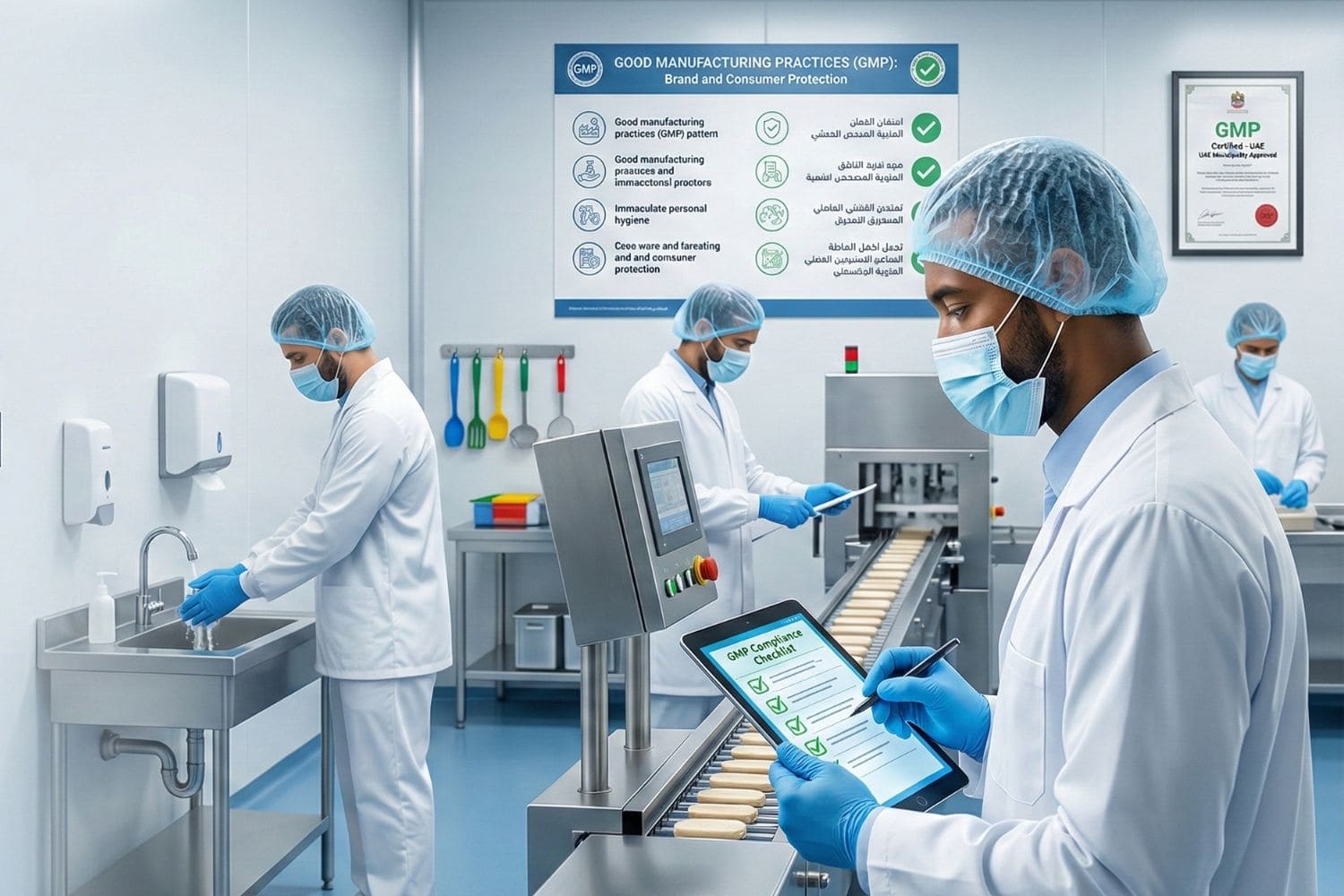
Good Manufacturing Practices (GMP) form the foundation of any successful food safety management system. Understanding and implementing these practices is crucial for protecting your brand and consumers while meeting mandatory regulatory requirements.
What are Good Manufacturing Practices?
GMP refers to the minimum sanitary and processing requirements necessary to ensure the production of safe and wholesome food. In the UAE, adhering to GMP is not just a best practice—it is a strict regulatory standard enforced by local municipalities.
Key Components of a GMP Program
1. Personnel Hygiene and Training
Your staff are your first line of defense. Proper food safety training for employees, including strict personal hygiene protocols and proper use of protective equipment, drastically reduces the risk of biological contamination.
2. Facility and Equipment Maintenance
Premises must be designed, constructed, and maintained in a way that prevents cross-contamination. Conducting routine facility and process inspections helps identify structural vulnerabilities before they become critical hazards.
3. Sanitation and Pest Control
A comprehensive, documented cleaning schedule and proactive pest control measures are non-negotiable elements of Good Hygiene Practices (GHP). Without them, even the most advanced HACCP plans will fail.
The Business Impact of GMP
Beyond baseline compliance, effective GMP implementation leads to process optimization, reduced product waste, and increased consumer trust. Partnering with a leading provider of food safety training and consulting services can help you tailor these fundamental practices to your organization's unique operations.